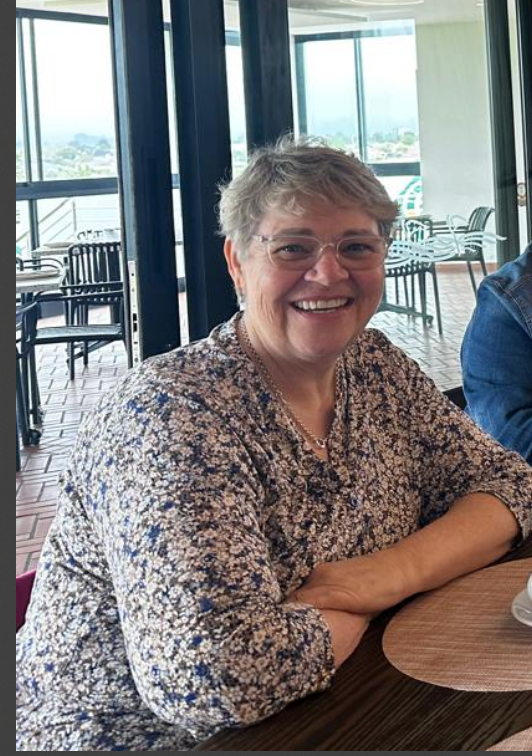
Non Smit

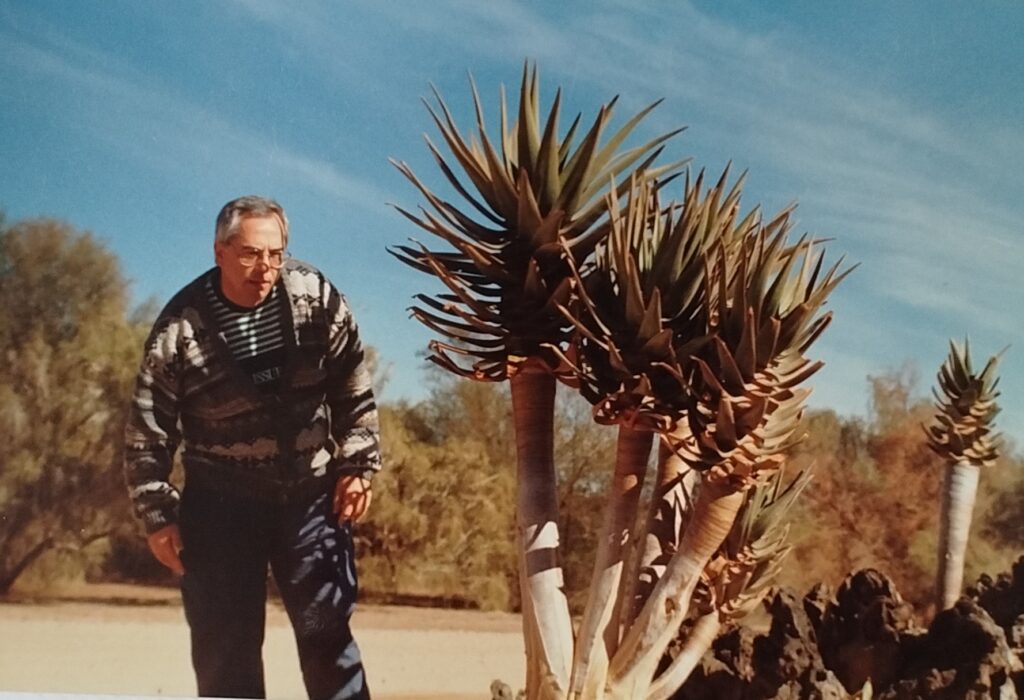
Theodore Bentley Shares His Lifetime of MS

 — and How He Turned His Journey Into Support for Others A story of faith, endurance, and a life lived in service despite decades of uncertainty When Theodore Bentley reflects on his life with Multiple Sclerosis, he does so with honesty, humility, and remarkable grace. Now 78, Theodore believes he has lived with MS since the age of 16 — long before the disease was recognised, understood, or diagnosable in South Africa. A Childhood Illness That Never Fully Resolved In 1962, as a teenager, Theodore became severely ill and was bedridden for six weeks with intense pain. Doctors diagnosed him with rheumatic fever following a tonsillectomy, but the explanation never fully made sense. Countless tests over the years provided no clarity, and the pain became an ongoing companion in his life. Decades later, in 1989, everything changed. “I woke up unable to see properly and had a rash. A skin specialist sent me to an ophthalmologist, who suspected MS.” A neurologist at Tygerberg Hospital began extensive testing — MRIs, lumbar punctures, evoked potentials — and monitored his blood monthly to rule out other conditions, especially given that Theodore had lived in Namibia. Eventually, MS became the most accurate and consistent explanation. Retrospective testing revealed he had never had rheumatic fever, but Glandular Fever, which had likely triggered the long-term immune complications that evolved into MS. A Diagnosis in the Early HIV Era Theodore’s worst symptom flare coincided with the early days of the HIV/AIDS crisis, when fear was widespread and medical knowledge was limited. Support systems were almost non-existent. He describes the uncertainty of that period as deeply frightening. But he did not walk it alone. A PhD student selected Theodore’s case as part of her research, offering him support and structure at a time when very little was available. His church community rallied too, surrounding him and his family with prayer, companionship, and practical support. “I had to learn to cope with depression and fatigue. My moodiness and lack of patience were difficult for my family. It’s a miracle I have a wife, family, and friends.” With renewed strength, Theodore returned to work and held onto his managerial role — determined not just to survive, but to find meaning. Turning Pain Into Purpose Faith became a central compass. Theodore studied theology and eventually served as a pastor, offering care and comfort to community members facing illness. Sitting beside those who were suffering, being a shoulder for others, and offering spiritual companionship became one of the most meaningful roles of his life. This work allowed him to transform struggle into service. A Family Built by Love and Determination Theodore and his wife married at 22. After years of struggling to conceive, they adopted their son. Later, to their joy and surprise, they welcomed a daughter. Today, their home is filled with grandchildren — a family Theodore describes as a blessing beyond measure. Staying Active, Staying Connected Movement is essential to Theodore’s well-being. He and his wife walk regularly — often in Kirstenbosch Gardens, or in shopping malls when the weather is unpredictable. He also enjoys golf with friends, even when MS symptoms make it challenging. His health challenges are ongoing. Swallowing difficulties, sinus issues, and continuous battles with medical aid authorisations are part of his life. But what troubles him most is something many people with MS will recognise: “One thing I struggle with is when people say, ‘But you look so good.’ It feels like a dagger in the back — like they think I’m not really sick, or that I’m crazy.” Invisible symptoms remain one of the most painful and misunderstood aspects of MS. Theodore’s Advice for Others Living With MS His guidance is heartfelt, simple, and wise: “Find a compassionate doctor who listens first. My first doctor didn’t hear me — I walked out and found one who did. Now we face the illness together as a team.” Beyond medical care, Theodore encourages small but powerful daily habits: “Get up, dress up — it helps your well-being — and show up.And above all, trust in the Lord.” Theodore’s life is shaped by decades of uncertainty, pain, resilience, faith, and love. His story shows that MS is not only a medical journey — it is a human one, woven with relationships, belief, perseverance, and purpose. Through everything, he has found strength not just in surviving MS, but in using his experience to uplift others.

Theodore Bentley Shares His Lifetime of MS Read More »
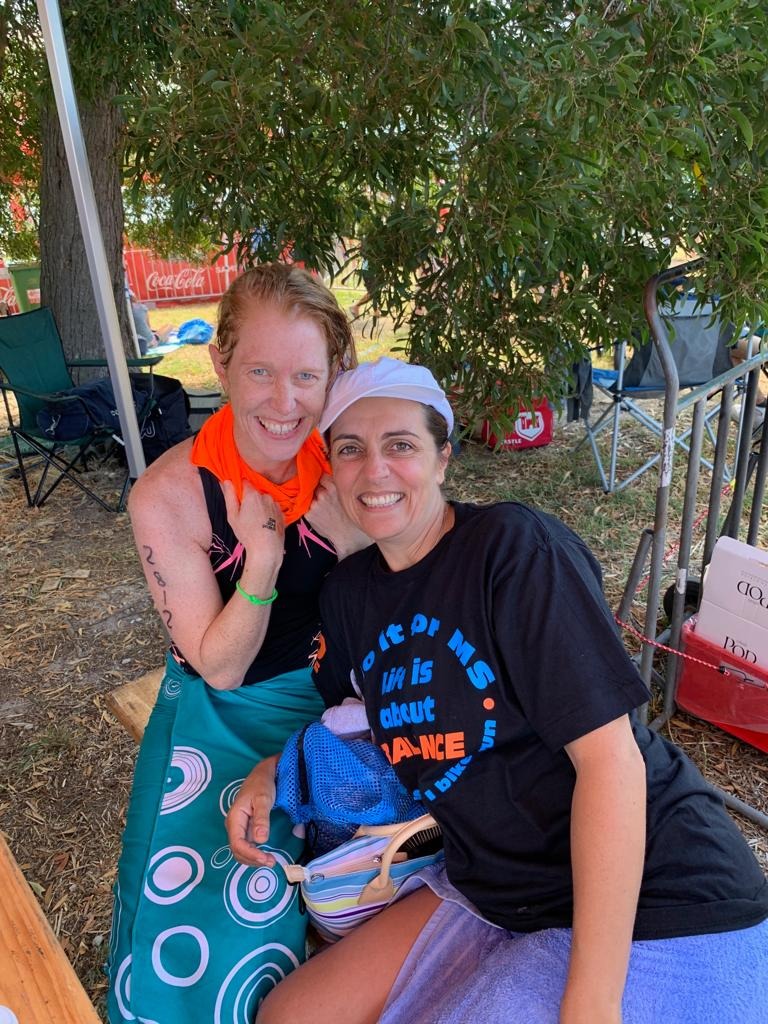
Tina Angelos Refuses to Let MS Dim Her Love of Life

A story of courage, motherhood, and choosing joy every day Born in Johannesburg as the youngest of three, Tina Angelos grew up surrounded by brothers who toughened her spirit and sharpened her resilience early in life. She later qualified as a pharmacist and then pushed herself even further, earning a business degree from WITS. Ambitious and determined, Tina built a thriving career — first as a Business Strategist, then a Management Consultant, and finally in Financial Services. But during her last corporate role, she began to feel that something was not quite right. Wanting better balance and more time with the people she loved, she made the decision to join her family’s group of companies. It was there, in 2005, that her life shifted dramatically: she was diagnosed with Multiple Sclerosis at just 30 years old. Facing MS Head-On At the time, MS was far less recognised than it is today, and treatment options were limited. Tina reacted poorly to the medication available — a regimen of multiple weekly injections that left her feeling as though she had full-body flu. Yet she refused to let MS define her. “I am madly in love with life, so I decided I would not let MS rule mine — easier said than done.” The physical, emotional, and lifestyle adjustments were immense, especially early on. But Tina kept showing up, day after day, choosing to keep living boldly and fully. Motherhood: A Journey of Hope and Heartbreak When Tina decided it was time to grow her family, MS added layers of complexity. She stopped her treatment, grateful to escape the harsh side effects — but this came with its own painful consequences. Over several years, she endured seven miscarriages and multiple MS flares. Eventually, she realised that even the strongest among us need support. With renewed determination and the right help, Tina and her family welcomed two healthy boys through surrogacy. Today, she is the proud mother of two sons, aged 9 and 11. “Being a mom is the best gift from God.” She balances motherhood with running the Industrial Sector of her family’s companies, often travelling locally and internationally for work. Life is full, demanding, and deeply meaningful — just the way Tina likes it. Finding the Right Treatment — and Stability As she continued educating others about MS in her early years of treatment, Tina realised she needed a specialist who truly understood the disease. She found a new neurologist and shifted to monthly IV infusions. It was life-changing. “I’ve been on my infusion for 12 years and am currently in NEDA — no evidence of disease activity. I’m incredibly grateful.” Her lesions remain — a reminder of the storm she has weathered — but there has been no deterioration. A Life Anchored by Movement, Mindset, and Support Tina thrives when she is moving. She swims, walks in nature, and proudly swims at MSSA events to help raise awareness and funds. Heat worsens her symptoms, so she keeps her movement light and intentional. When indoors, she turns to crime shows, business reads, and the sacred ritual of morning coffee. But what truly keeps Tina grounded is her commitment to mental well-being. “Your mindset is everything. You need constant emotional and mental support.” She works closely with a psychiatrist, attends monthly appointments, and adheres to her medication plan — not out of weakness, but out of wisdom. “I take my antidepressants so I can be the best version of myself. No one can do this journey alone.” She also speaks openly about MS — with friends, colleagues, and family — because she believes education reduces misunderstanding and creates safer spaces. And above all, she practices kindness toward herself. “Only you know exactly how you feel. Give yourself solitude. Don’t feel guilty about taking time for yourself.” Her Message to Others Living With MS Tina believes that while each MS journey is unique, people with MS share powerful common experiences. Her advice to anyone navigating MS is simple, compassionate, and practical: “Lean on one another. Reach out to people you trust. Ask direct questions. Take control of what you can — and for the rest, let the process take its course.” Tina’s life is a testament to courage, purpose, and choosing joy even when the path is steep. Through her commitment to her family, her career, her mental health, and her MS community, she shines as a powerful example of what it means to live — truly live — with MS.

Tina Angelos Refuses to Let MS Dim Her Love of Life Read More »

Arlene Aldawaimeh Starts Every Day With a Smile — Even on the Hard Days

Closing MSSA’s 75th Anniversary MS Hero Series As Multiple Sclerosis South Africa (MSSA) celebrates its 75th anniversary, we close this year’s MS Hero Series with a story that reminds us of resilience, grace, and the quiet courage found in everyday living. Today we meet Arlene Aldawaimeh, our twelfth and final MS Hero of 2025. Over the past year, eleven South Africans have stepped forward to share their deeply personal journeys with Multiple Sclerosis. Together, they have helped dismantle misconceptions, challenged outdated stereotypes, and offered hope to thousands of families across the country. Arlene now joins this powerful collection of voices — and her story is a fitting finale. MS remains underrepresented and often misunderstood in South Africa. But this is changing. MSSA continues to raise national awareness, support families navigating complex care pathways, and advocate for equitable access to treatment. Our heroes have played a vital role in this mission, creating a growing library of real-life experiences that newly diagnosed individuals can turn to for comfort, clarity, and connection. As we round off our diamond jubilee celebrations, we extend our heartfelt thanks to every gem of a human who shared their journey with us this year. Meet Arlene: The Woman Who Chooses to Start Each Day With a Smile Arlene spent most of her adult life in the corporate world. Even after her MS diagnosis in 2013, she adapted, adjusted, and kept working through shifting demands in the workplace. But after the pandemic, her physical abilities changed, and life asked her to pivot. At 54, Arlene embraced a new chapter — one that traded office commutes for a home-based role helping people plan the travel experiences of their dreams. Travel has always been one of her great loves. She laughs when she says her camera bag was always heavier than her clothing bag. These days, travel is a little harder, but she hasn’t lost her connection to the world. Now she helps others explore it — and finds joy in helping them do so. At home, Arlene has created a peaceful haven: a garden sanctuary filled with quiet corners where she can reconnect with nature. When she can’t be outdoors, she immerses herself in wildlife documentaries and engineering shows — small joys that have become part of her rhythm. A Long Path to Diagnosis, and a New Way of Living Arlene’s MS journey began long before her diagnosis. For two years, she experienced unexplained flares and strange symptoms. When her neurologist finally confirmed MS in November 2013, she felt relief. But she quickly learned that diagnosis is not the end — it’s the beginning of navigating a life shaped by highs, lows, adaptations, and choices. “Aside from all the negative things, I don’t like to give them too much space in my life. MS has taken plenty — but it has also made me more sympathetic to others fighting their own battles.” Her perspective shifted. She now chooses her battles carefully, finding strength in stepping away from conflict and choosing peace — something she once thought signalled weakness but now sees as a quiet act of self-preservation. Her faith, she says, has been reignited. She no longer fears tomorrow. “Whatever I have to deal with today, I won’t fear what comes next. And yes — I still plan to travel, to enjoy the wild, and to enjoy my life.” The Ongoing Challenge: Finding the Right Support Team Like many people living with MS, Arlene has found that one of her biggest challenges is accessing the right team to support her physical well-being. “I’ve been searching for professionals who can help with specific physical exercises — muscle stimulation, core strengthening, targeted areas. I only wish I had started this earlier when I was still more mobile.” This is a common reality across South Africa, where specialised MS-trained allied health support remains limited. Arlene’s story reflects the broader gaps MSSA continues to advocate around. Arlene’s Message for Anyone Newly Diagnosed Her advice is one of the most powerful messages in this year’s series: “You are braver and stronger than you realise — more resilient than anyone will ever give you credit for.When you feel like giving up, look back at what you’ve already overcome.Reward yourself for the small victory’s others might not see, but that feel huge to us.Choose to remember what that feels like.” For Arlene, the hope is simple: she wants to be remembered for more than just having MS. She wants to be seen for the woman who chooses joy at the start of every day — even on the hard ones. A Fitting End to Our Anniversary Year Arlene’s story closes our 2025 MS Hero Series with exactly what this milestone year deserved:honesty, courage, hope, and a reminder that life does not end with MS — it simply reshapes itself. Her journey is a tribute to the human spirit and to every person who has walked alongside MSSA over 75 years. Here’s to Arlene, and to every MS hero who shared their light with us this year.

Arlene Aldawaimeh Starts Every Day With a Smile — Even on the Hard Days Read More »

International Day of Persons with Disabilities – A Reflection from Our MS Community

Today is a day that carries deep meaning for me and for all of us connected to the MS community in South Africa. International Day of Persons with Disabilities is not an abstract concept here — it is lived reality, every single day, by thousands of people who refuse to be defined by the limits MS tries to impose. What I have learned over the years is this: our community keeps choosing courage, dignity and possibility, even when the world does not always make space for them. I want to honour the people who show me, time and again, what strength really looks like. • Martyn, working patiently with Hendrik, his biokineticist, to improve his drop foot and balance — showing what steady effort can unlock. • Leanda, walking her May50K with pride, wearing her MSSA t-shirt, reminding us how visibility can shift perceptions. • Alta Hamilton, running the Comrades for Dr Mike, carrying our whole community in her heart. • Claudia Dieckmann, keeping Quiz4MS going month after month, grinding at our new campaign for next year — a reminder that fundraising can be an act of love. • The Northern runners, showing us how movement can unite people. • Arthur Kitoloh, who faced job loss because of MS, yet continues rebuilding his life with courage that humbles me. • Sello, whose journey reminds us why being believed matters. I will never forget his wife standing up at our meeting, in a room of 80 people, and apologising for not recognising his symptoms sooner. Her honesty — and his grace in receiving it — moved everyone present. Their story shows the healing that becomes possible when understanding finally arrives. • Ruth Tladi, living with both MS and scleroderma, navigating a public health system that too often overlooks invisible illness — her quiet resilience is extraordinary. • So many of our WhatsApp support group members, who carry one another through the hardest days and celebrate the small wins. Each of these stories — and many more — are reminders that disability is not the absence of ability. It is the presence of strength, adaptation and community. What this day means for us For the MS community, Disability Day is a reminder that: • Access is a right — to treatment, diagnosis, workplace support and dignity. • Tools are not limitations — whether it’s walking sticks, orthotics, medication, or a biokinetic programme. These are pathways to independence. • Community is everything. None of us walk this path alone. I am incredibly proud of the people who make up MSSA — the walkers, the runners, the fighters, the caregivers, the fundraisers, the storytellers, and the ones still finding their way. On this day, I stand with you. With admiration. With respect. With gratitude. Thank you for showing South Africa what resilience looks like. Thank you for reminding us that disability is not weakness — it is humanity in its most determined form. Non & Team MS South Africa #IDPD2025 #MultipleSclerosis #MSCommunity #DisabilityInclusion #AccessibilityMatters #InvisibleDisabilities #TeamMSSA

International Day of Persons with Disabilities – A Reflection from Our MS Community Read More »

The Impact of Dosage Changes in MS: What We Need to Talk About

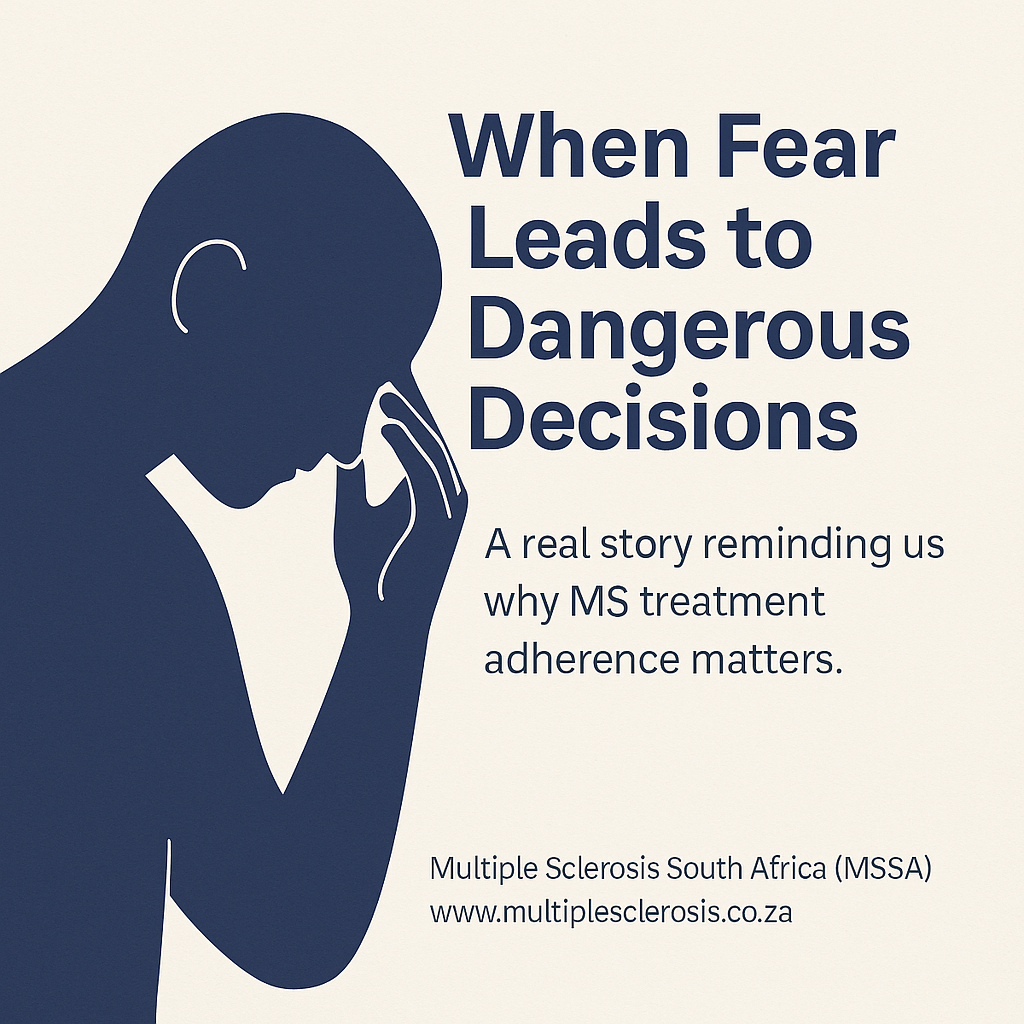
Living with multiple sclerosis (meervoudige sklerose) (MS) is a daily balancing act — physically, emotionally, and mentally. And in that journey, information can empower, but it can also overwhelm. Recently, a situation reminded me why we must keep having honest conversations about treatment adherence. A person with MS (details withheld for privacy) made the difficult mistake of reading too much into the pharmacy-issued information leaflet of their chronic medication. Out of fear, they adjusted the dosage on their own for almost a year. They continued believing the lower dose was “safer”. The result: five new lesions on the brain. What makes this especially heartbreaking is that, for years, on the correct dosage and under specialist supervision, this person had: zero side effects, zero new lesions, and stable, well-managed MS. This is not an isolated story — it’s simply one example of a much wider challenge. In MS, self-adjusted dosing can be dangerous. The treatment schedules and dosages recommended by neurologists are the result of global evidence, safety data, clinical trials, and long-term patient outcomes. Changing this without medical guidance can undo years of stability. Why I’m sharing this Because MS patients deserve to feel informed — but also safe.Because pharmacies and information leaflets don’t tell the whole clinical story.Because fear can make people second-guess even what has worked well for them.And because we need to talk more openly about the importance of staying in communication with your MS specialist. What we can all take forward ✔️ Ask your neurologist or MS nurse if anything on the leaflet worries you✔️ Never change your dose without medical guidance✔️ MS treatments are designed to prevent damage you cannot feel happening✔️ Trust the partnership you have with your treating team Most importantly: You are not alone in navigating MS.Safe guidance exists. Evidence-based care exists. And support exists — every step of the way.

The Impact of Dosage Changes in MS: What We Need to Talk About Read More »

From Drop Foot to Confidence: Martyn’s Progress With Targeted Movement Therapy

Movement changes everything.In this video, Martyn works closely with his biokineticist, Hendrik, using targeted exercises to improve his drop foot and overall mobility. A powerful reminder that with the right support, consistency, and an expert who understands MS, meaningful progress is possible. Supporting people with MS is not only about treatment — it’s also about movement, connection, and the right guidance. Today we’re sharing an inspiring educational video featuring Martyn, one of our community members, working with his biokineticist Hendrik. Their focused work together has led to remarkable improvements in Martyn’s drop foot, balance, and overall mobility. This is what a patient-centred, practical approach looks like: targeted exercises guided corrections consistency over time building strength safely and effectively Martyn has been living with MS for many years, and one of his biggest challenges has been managing drop foot and the impact it has on his gait and functional movement. Working closely with Hendrik, he followed a structured, MS-informed movement programme designed to activate the right muscle groups, rebuild strength, and restore functional mobility. The progress shown in this video reflects more than physical improvement — it highlights confidence, control, and the value of MS-knowledgeable allied healthcare. Martyn’s commitment, combined with Hendrik’s guidance, demonstrates how meaningful change is possible when movement becomes part of everyday life. At MSSA, we are committed to sharing real-world examples of what works for people with MS in South Africa — from exercise and rehabilitation to peer support and community-led learning. Watch the video to see Martyn’s progress and the techniques that supported his journey.

From Drop Foot to Confidence: Martyn’s Progress With Targeted Movement Therapy Read More »

Radio Talk: Living With MS During the Festive Season

Originally aired on Radio Rosestad (South Africa) – Afrikaans.Below is the English translation of my interview so others can share in the reflections and guidance. 1. End-of-year impact on people with MS The end of the year is especially exhausting for people with MS. This fatigue is neurological — it cannot be fixed with rest or a nap. Many experience more cognitive lapses, concentration problems, heat intolerance, and muscle weakness in December. Festive noise, heat, crowds, and fast schedules overload the body and mind. It might sound like excuses, but it is the reality of how MS reacts to these triggers. 2. How families and friends can support Let the person decide which events they can handle, without pressure. Make things easier without them needing to ask — asking is extremely difficult. Drop them at the door or park close. Choose a quiet corner, away from heat if possible, with airflow. Don’t take last-minute cancellations personally; it is the MS, not the person. Ask: “What can make this easier for you today?” For the person with MS: plan your day, choose where to spend or save energy, and say “thank you, I would love to, but I can’t today.” Remember: being present doesn’t always have to be physical. 3. What the public should know about MS fatigue MS fatigue is NOT normal tiredness. Life moves too fast for someone with MS in social situations. They are not lazy, dramatic, or antisocial. Every activity has a price. They want to be included — just with understanding for the limitations the disease creates. They don’t want to look, feel, or smell different; they want to feel normal. 4. Reflection on the MS community’s resilience People with MS are incredibly strong — not because they want to be, but because they must be. I see people every day who never chose this invisible illness. Yet they live with courage, humour, dignity, and quiet acceptance. They are Champions. My wish: progress in preventing MS, fair access to treatment in our unequal system, and more understanding in families, workplaces, and society. Many people look “healthy” but cannot keep up with life’s pace. Understanding can change everything. 5. Where to connect with MSSA Website: www.multiplesclerosis.co.za Email: info@multiplesclerosis.co.za WhatsApp: 0825505486 Membership link: https://bit.ly/3HnZeHw

Radio Talk: Living With MS During the Festive Season Read More »

The “Lazarus Effect” and a Glimpse of What Might Be Possible in MS

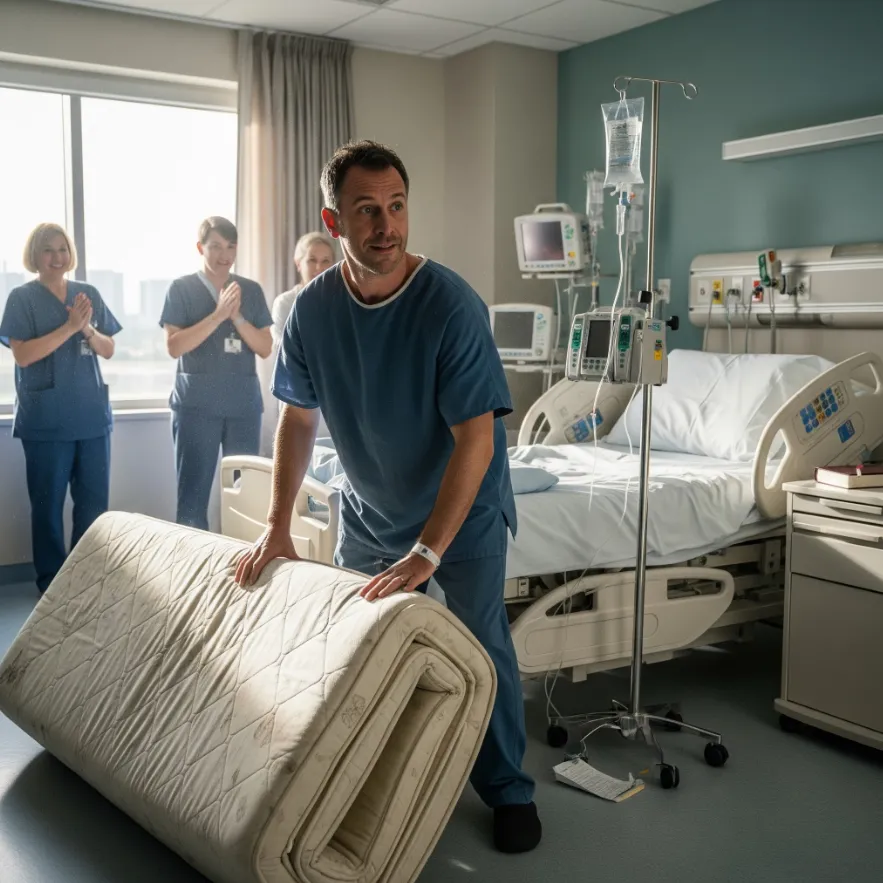
Every so often, something happens in the MS world that makes everyone pause — not because it’s hype, but because it feels like the future cracking open just a little. Prof Barbara Willekens shared a story of a young man with advanced progressive MS — someone already moving towards a wheelchair — who received a first-in-human CAR-T cell therapy in China earlier this year. When treated, his EDSS was around 6.5–7.0, meaning he needed two sticks and often a wheelchair for mobility. Nine months later, he was filmed running.Not perfectly. Not without stiffness. But running — something that would normally be considered impossible at that level of MS progression. The room erupted into applause. Even Prof G admitted he had a tear in his eye. What is this therapy? It’s an experimental CAR-T therapy that targets BCMA, a marker found on long-lived plasma cells in the central nervous system. These cells are believed to drive ongoing inflammation and progression in MS, especially progressive MS. This approach is different because it: Penetrates the CNS Depletes disease-related plasma cells inside the CNS Reduces markers of antibody production in the CSF Shows early signs of functional improvement It is still early, small-scale research — only five people have been treated — but all showed some degree of improvement. One showed a recovery so striking that researchers refer to it as the “Lazarus effect.” Why this matters For people living with progressive MS, research progress can feel slow. But moments like this show that the global scientific community is pushing into new territory: Better understanding of immune drivers New technologies to reach the central nervous system Therapies designed to target the cells that may sustain progression It’s not a cure.It’s not ready for clinical use.But it is a glimpse — a real one — of what might be possible. Balancing hope with caution The study (Qin et al., Cell, 2025) was open-label and very small. More trials are needed, and we will follow them closely. But science often shifts because one brave idea works once — and then again — and then becomes a new pathway for everyone. As Prof G wrote:“How many swallows make a summer?”Sometimes one is enough to show which way the wind is blowing. To read Prof Gavin Giovannoni’s full commentary Visit his MS-Selfie newsletter on Substack:https://gavingiovannoni.substack.com We thank Prof G for his ongoing contribution to global MS understanding and for making complex science accessible to all.

The “Lazarus Effect” and a Glimpse of What Might Be Possible in MS Read More »

Lizzie won a Low Carb Pantry giveaway!

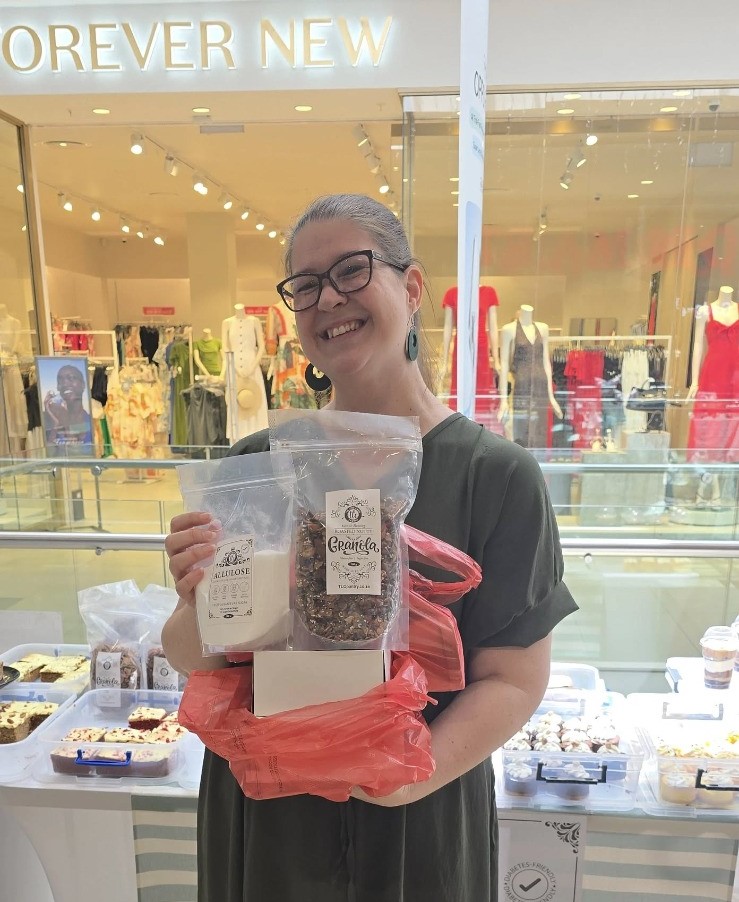
Every now and then, a story comes along that reminds us why lived-experience voices matter — and why lifestyle choices can become powerful tools in managing chronic illness. Today I’m sharing the incredible journey of Elizabeth Bothma, who recently won a Low Carb Pantry giveaway — and who generously allowed her story to be shared in her own words. Elizabeth’s Story “I was diagnosed with Multiple Sclerosis in 2019. MS is an autoimmune condition where the immune system attacks the central nervous system. Inflammation worsens the damage, and while disease-modifying therapies help slow progression, they can be expensive and inaccessible. After my diagnosis, I researched everything — anti-inflammatory foods, the Autoimmune Protocol, Banting, Keto, Paleo, the OMS diet… Some helped, but many weren’t sustainable. In August 2025 I cut out carbs completely — and the shift was immediate. Less fatigue, less pain, clearer thinking, better sleep. I thought I was imagining it, until my birthday week. One regular slice of cake, and I crashed: headaches, exhaustion, three days to recover. That’s when I committed to Keto as a permanent lifestyle.” Her Journey With Low-Carb Living “I’ve always loved finding sugar-free, carb-free options — not for dieting, but because cheating simply isn’t an option when your health depends on it. We all still miss treats, proper toast, something sweet to celebrate with… and low-carb alternatives made that possible for me without risking my wellbeing. Since going carb-free, I’ve lost more than 10 kg in 12 weeks and have been consistently in ketosis. My MS symptoms — fatigue, brain fog, pain, forgetfulness — all respond directly to what I eat. This lifestyle has made a remarkable difference to my daily quality of life.” Elizabeth’s experience is a reminder that lifestyle changes are not cures — but they can be powerful tools.And when someone living with MS shares openly and honestly, it gives hope and practical insight to so many others walking the same path. Congratulations again, Elizabeth — your story will encourage countless others. #MultipleSclerosis #ChronicIllness #AutoimmuneHealth #KetoLifestyle #Inflammation #LowCarbLiving #PatientVoice #RealStoriesMatter

Lizzie won a Low Carb Pantry giveaway! Read More »

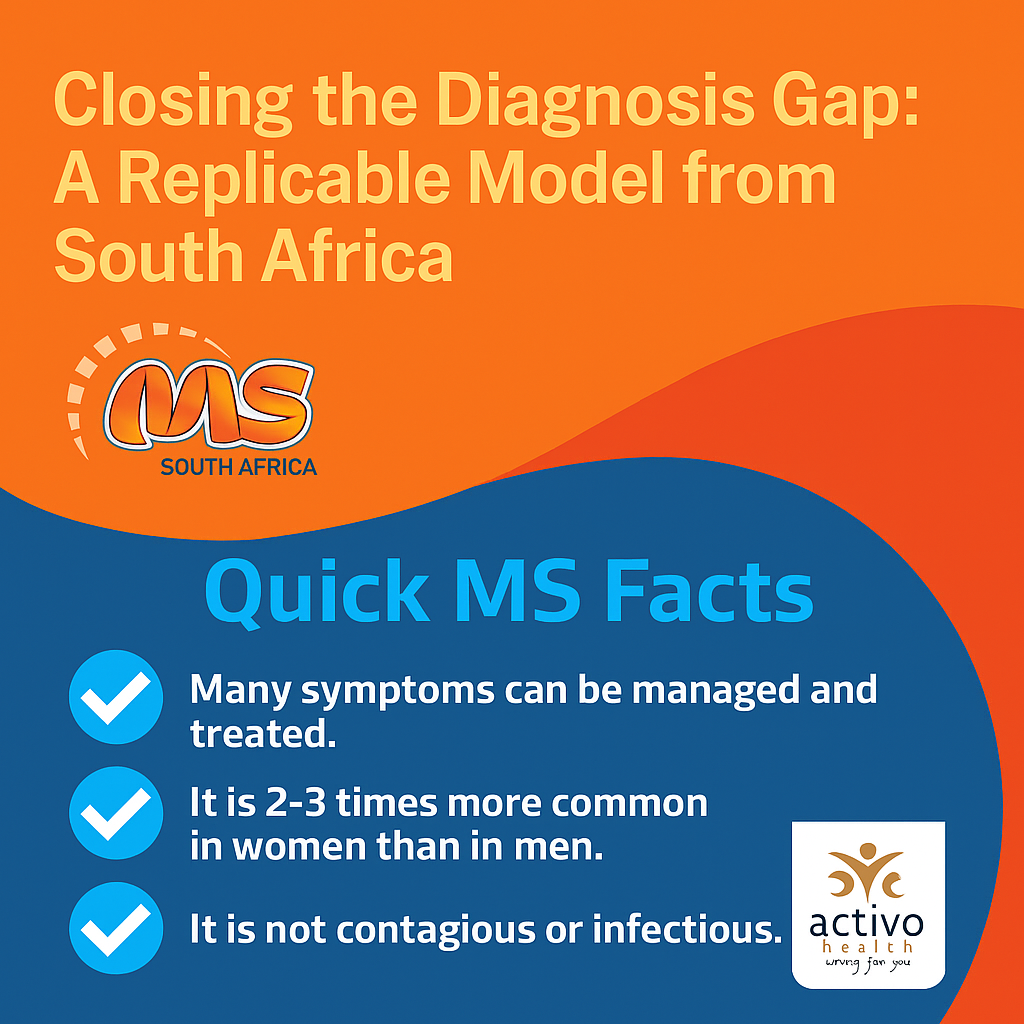
Closing the Diagnosis Gap: A Replicable Model from South Africa

A three-part GP Upskilling Series with Dr Dion Opperman, made possible through a grant from Activo Health. Why This Series Matters Across South Africa — and much of the world — people with multiple sclerosis (MS) continue to face late or incorrect diagnoses, often after years of unexplained symptoms. The consequence is not only emotional and physical distress, but also accumulated, irreversible disability that could have been slowed or prevented with earlier intervention. This blog introduces a three-part educational video series by Dr Dion Opperman, neurologist and member of the MSSA Medical & Scientific Advisory Board, created to upskill general practitioners (GPs) and frontline healthcare professionals. The project was born from the urgent need to address delayed diagnosis and strengthen the referral pathway between primary care and specialist neurology. It was made possible through the support of Activo Health, whose grant enabled the series’ recording and professional production — a first of its kind for South Africa. The Impact of Delayed Diagnosis When MS is diagnosed late, treatment options narrow and outcomes worsen. Early and accurate diagnosis allows for the initiation of disease-modifying therapy (DMT), reducing relapses and long-term disability. Late diagnosis, however, shifts the focus to managing complications, preserving function, and improving quality of life. The difference between these paths often lies in the GP’s ability to recognise MS early — understanding when a constellation of seemingly unrelated neurological symptoms warrants referral to a neurologist. This is where education makes a tangible difference — and where this series begins. The Educational Series: Scroll to Watch Each video builds on the last, offering GPs clear, locally relevant guidance for improving MS outcomes from the very first consultation. Episode 1 – Understanding Multiple Sclerosis: Recognising the Red Flags Watch on Vimeo Dr Opperman explains the underlying mechanisms of MS, the hallmark signs and symptoms, and how subtle or transient neurological changes can be easily overlooked in general practice.Key points: How MS affects the central nervous system Typical early signs: vision loss, balance changes, numbness, fatigue Diagnostic workup and MRI interpretation essentials When to suspect MS and refer for specialist assessment Episode 2 – Treatment Pathways and Monitoring: What GPs Need to Know Watch Replay This episode focuses on treatment initiation and continuity, giving primary-care clinicians an overview of current DMT options in South Africa and the GP’s role in ongoing patient support.Key points: Disease-modifying therapies: what’s available and how they work Addressing access barriers in private vs. public sectors GP’s monitoring responsibilities (safety, side effects, adherence) Supporting informed, shared decision-making Episode 3 – Living Well with MS: The GP’s Perspective Watch Replay The final session explores how to sustain long-term wellness in MS, highlighting the GP’s pivotal role in managing fatigue, pain, mental health, and comorbidities.Key points: Managing cognitive and emotional changes Referring to allied professionals (physio, neuropsychology, OT) Lifestyle interventions that preserve brain health Coordination of care for better patient outcomes From Local Practice to Global Progress The launch of this South African GP Upskilling Series aligns with global conversations at ECTRIMS 2025, where new research continues to refine how MS is diagnosed and treated. The updated McDonald diagnostic criteria — expected to integrate advanced MRI markers, spinal fluid analysis, and emerging biomarkers of neuroinflammation — promise earlier and more accurate identification of MS than ever before.But these advances will only reach patients if frontline clinicians know what to look for. This is why this series is more than education; it’s a replicable model for health system strengthening. By starting with the doctors who first see the patient, MSSA is helping close a diagnostic gap that has persisted for decades across Africa. Acknowledgement MSSA extends sincere appreciation to Activo Health for their collaboration and funding support, and to Dr Dion Opperman for his ongoing contribution to improving MS care, education, and patient outcomes in South Africa. Learn More and Get Involved Explore more MSSA educational resources: https://www.multiplesclerosis.co.za Join the MSSA professional network or support groups: https://bit.ly/3HnZeHw Contact: non@multiplesclerosis.co.za Multiple Sclerosis South Africa (MSSA)Advancing early diagnosis, equitable access, and informed care across the MS landscape. — Non Smit (CEO) Team MS South Africa

Closing the Diagnosis Gap: A Replicable Model from South Africa Read More »