Did you Know

How Multiple Sclerosis South Africa Supports People Living With MS

A diagnosis of multiple sclerosis can bring many questions, decisions and practical challenges. It can also feel isolating, particularly when people do not know where to turn for reliable information, support or connection. Multiple Sclerosis South Africa (MSSA) is a national patient-support organisation for people living with multiple sclerosis, their families and caregivers across South Africa. We do not provide medical treatment, prescribe medication or operate a clinical facility. However, we offer support, trusted information, connection and advocacy to help people affected by MS navigate the realities of living with the condition. What MSSA Offers Trusted information and practical guidance MS can be complex, and information online is not always reliable or relevant to South Africa. MSSA helps people better understand: Multiple sclerosis and its different forms Symptoms, relapses and day-to-day challenges Treatment pathways and the importance of working with a neurologist Medical-aid processes and access challenges State-sector care and referral pathways Disability, workplace and practical support concerns Questions to ask healthcare professionals Our role is to help people find clear, responsible information and understand where to seek the right professional help. Peer-support communities No person should have to navigate MS alone. MSSA connects people living with MS through peer-support communities where members can share experiences, ask practical questions and find encouragement from others who understand the journey. Our support communities include: Provincial MS groups Treatment-specific groups Groups for people living with progressive MS Younger people with MS groups Caregiver and family-support spaces National support communities These groups are not a replacement for medical care. They are spaces for connection, shared experience and mutual support. Advocacy and access support Many people living with MS face barriers that go beyond the condition itself. MSSA advocates for improved access to neurologists, earlier diagnosis, appropriate treatment and equitable healthcare. We also support members who are navigating challenges such as: Medical-aid funding or treatment-access concerns Delays or difficulties in accessing specialists State-sector neurology services Disability-related concerns Workplace challenges and reasonable accommodation Access to rehabilitation and support services While we cannot make clinical or medical-aid decisions on behalf of a person, we can help clarify processes, identify possible next steps and direct people to appropriate channels. Educational sessions and webinars Knowledge can make a meaningful difference. MSSA hosts educational sessions, webinars and discussions with neurologists, healthcare professionals and people with lived experience of MS. These sessions aim to provide accurate information, practical insight and opportunities for people to ask questions in a supportive environment. Topics may include treatment, symptom management, progressive MS, emotional wellbeing, disability, workplace issues, caregiving, research and living well with MS. Referrals and signposting Where possible, MSSA helps people identify appropriate services and professionals. This may include signposting to: Neurologists and MS-focused healthcare professionals Rehabilitation therapists, including physiotherapists, occupational therapists and speech therapists Social workers and community services Legal, disability and workplace-support resources Relevant patient-support programmes and organisations MSSA does not replace professional medical, legal or social-work advice, but we can often help people understand where to begin. Community connection At the heart of MSSA is community. Living with MS can affect relationships, work, finances, independence, mental wellbeing and everyday life. Connecting with others who understand can make an enormous difference. MSSA exists so that people living with MS in South Africa do not have to face the journey in isolation. Important Medical Disclaimer For medical advice, diagnosis, prescriptions, treatment decisions or changes to medication, it is essential to work directly with a neurologist or treating healthcare team. MSSA provides support, information and connection, but does not replace individual medical care. Join Multiple Sclerosis South Africa If you are living with MS, a family member, caregiver or supporter, you are welcome to apply to join Multiple Sclerosis South Africa. Membership connects people with our national MS community, trusted information, relevant support groups, educational opportunities and updates on advocacy and access matters affecting people living with MS in South Africa. To apply, please complete the online membership application form: Apply to join MSSA here The form will ask for the information we need to process your application and help ensure that you are connected with the most relevant MSSA support structures. Once your application has been reviewed, we will guide you through the next steps.

How Multiple Sclerosis South Africa Supports People Living With MS Read More »
What Is GAP Cover and How Does It Work?

GAP cover (also called medical gap insurance) is an additional insurance product that you buy separately from your medical aid. Its purpose is to cover the shortfall when a doctor or specialist charges more than what your medical aid is willing to pay. What GAP Cover Is GAP cover is not a medical aid. It is an insurance policy that helps you pay the difference between: what your specialist charges, and what your medical aid pays from your hospital benefit. Typical example: A neurologist charges 300% of medical aid rate, but your medical aid pays only 100%. GAP cover helps pay the extra 200%. What GAP Cover Does Cover Most GAP cover plans pay for: Hospital specialist shortfalls (consultants, surgeons, anaesthetists). In-hospital procedures where the claim exceeds medical aid rates. Certain co-payments, depending on your plan. MRI / CT scan co-payments (some plans). Emergency or trauma benefits (varies by provider). Deductibles for certain procedures. Important: GAP cover is mainly designed for hospital-related costs and not every day chronic care. Will GAP Cover Pay for Treatment Co-Payments? Sometimes yes — sometimes no. It depends entirely on the specific GAP plan. Usually Covered: ✔ Hospital admission co-payments ✔ MRI/CT co-payments (depending on the plan) ✔ Specialist shortfalls (in-hospital) Usually Not Covered: ✖ Chronic medication co-payments ✖ Day-to-day expenses ✖ Consultations outside hospital (unless explicitly stated) For MS treatments: Most GAP covers do NOT pay co-payments for disease-modifying therapy (DMT) unless the plan specifically says it does — and most do not. Always check the benefit wording. Can GAP Cover Be Depleted? Yes. GAP cover has annual limits, which can run out. Typical limits include: Overall annual limit (e.g., R150,000 – R200,000 per insured person per year). Internal limits for scans, co-payments, or oncology. Some benefits are capped per claim or per event. Once the annual limit is reached, GAP cover will not pay further claims for that year. Key Things Patients Should Know You must already have a medical aid to take out GAP cover. GAP cover does not replace medical aid or cover what your medical aid excludes. Pre-existing condition waiting periods may apply (usually 10–12 months). Claims are usually submitted after your medical aid processes the bill. Simple Summary for Quick Messaging GAP cover helps pay the difference when specialists charge more than your medical aid covers, mainly during hospital procedures. It may pay some co-payments (like MRI scans), but it usually does not cover chronic medication co-payments. It has annual limits, so it can be depleted. Always check the specific plan’s benefits.

What Is GAP Cover and How Does It Work? Read More »

Here’s How MSSA Is Changing the Landscape in South Africa

Understanding MS, dispelling myths, and strengthening support for those living with the disease South Africa (01 May 2023) — Every year, the month of May is dedicated to raising awareness about Multiple Sclerosis (MS), a chronic neurological disease that remains under-discussed and often misunderstood in South Africa. But that is beginning to change. Multiple Sclerosis South Africa (MSSA) has been working for 75 years to increase understanding of MS, provide support to families, and advocate for better access to treatment and care across the country. The organisation’s long-term vision is to strengthen MS advocacy across the African continent, uniting countries to create a collective voice for those living with MS. This Awareness Month, MSSA is amplifying education, sharing patient stories, and ensuring that MS becomes a recognised and respected public health priority. What Is Multiple Sclerosis? Multiple Sclerosis is an unpredictable and often disabling disease of the central nervous system. It disrupts communication within the brain, and between the brain and body, affecting a wide range of functions. Common Early Symptoms Include: Numbness or tingling Fatigue Vision problems or blindness Muscle weakness Cognitive challenges (memory, focus, processing) Balance or mobility difficulties Because symptoms vary so widely from person to person, MS can be difficult to diagnose and easy to misunderstand. Why Does MS Affect People So Differently? MS occurs when the immune system attacks myelin, the protective covering around nerve fibres in the brain and spinal cord. When this insulation is damaged, the nerve signals slow down or stop — just like an electrical wire with damaged coating. Myelin becomes replaced by hardened scar tissue called plaques or lesions, which appear in multiple places in the central nervous system — giving the disease its name. Every person experiences MS differently because: Lesions occur in different parts of the nervous system Symptoms may come and go Damage can vary from mild to severe Recovery between relapses is unpredictable Is MS Fatal? Separating Fact from Myth There are many misconceptions about MS. Here are some clarifications: Is MS fatal? No — MS itself is not considered a fatal disease.Most people with MS have a near-normal life expectancy. Complications and co-existing health conditions may shorten life by an average of 5–7 years, but this can often be prevented or managed through good medical care, a healthy lifestyle, and early treatment. Does MS always cause paralysis? No.Two-thirds of people with MS remain able to walk, though they may need an aid such as a cane or crutches. Is MS contagious? No — MS is not contagious and cannot be passed from person to person. Is MS genetic? Not directly, though genetics can increase susceptibility. A family member with MS slightly raises the risk, but it does not guarantee that someone will develop the disease. Diagnosis and Treatment in South Africa Diagnosing MS can be challenging because symptoms often mimic other conditions. Many people experience years of unexplained symptoms before reaching a neurologist. Diagnosis often includes: MRI scans (the most reliable tool) Lumbar puncture Evoked potential tests Neurological examinations No single test can diagnose MS alone, but MRI technology has made accurate diagnosis far more accessible. Treatment varies widely There is no cure yet, but multiple treatment options exist — especially disease-modifying therapies (DMTs) that reduce relapse rates and slow progression. People living with MS often benefit from: Physiotherapy and biokinetics Occupational therapy Neuropsychology Peer-support groups Lifestyle changes such as improved sleep, stress management, and regular exercise Support networks like MSSA play a crucial role in helping individuals navigate treatment choices and manage the emotional and practical aspects of living with MS. Sharing Stories to Raise Awareness Throughout May, MSSA highlights the voices of people living with MS — individuals who courageously share their personal journeys to help others understand the disease more deeply. These stories have inspired countless South Africans to seek medical help, find community, or simply feel less alone. Each story is a reminder:MS is not the end of a meaningful life — it is the beginning of a different one, filled with resilience, adaptation, and strength. How to Support MSSA If you would like to support MSSA’s work, here are ways to get involved: Donate via GivenGain:Move Strong May Visit the MSSA Website:Home Join the Private Support Group:Contact the MSSA team for access and information. info@multiplesclerosis.co.za Multiple Sclerosis Awareness Month of May is more than an observance — it is a call to action.A call for recognition.A call for community.And a call for compassion. Every person living with MS deserves to be supported, understood, and seen. MSSA remains committed to making that a reality across South Africa and beyond.

Here’s How MSSA Is Changing the Landscape in South Africa Read More »

The Impact of Dosage Changes in MS: What We Need to Talk About

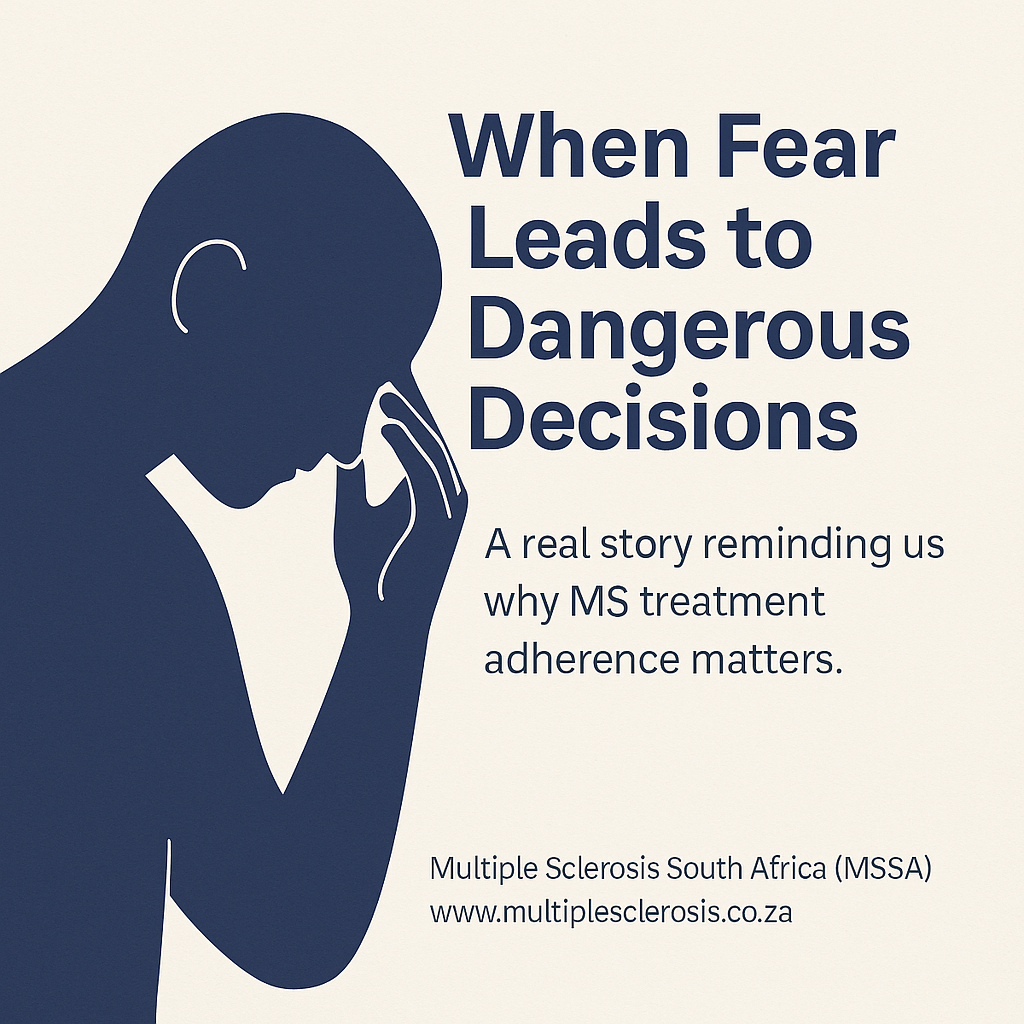
Living with multiple sclerosis (meervoudige sklerose) (MS) is a daily balancing act — physically, emotionally, and mentally. And in that journey, information can empower, but it can also overwhelm. Recently, a situation reminded me why we must keep having honest conversations about treatment adherence. A person with MS (details withheld for privacy) made the difficult mistake of reading too much into the pharmacy-issued information leaflet of their chronic medication. Out of fear, they adjusted the dosage on their own for almost a year. They continued believing the lower dose was “safer”. The result: five new lesions on the brain. What makes this especially heartbreaking is that, for years, on the correct dosage and under specialist supervision, this person had: zero side effects, zero new lesions, and stable, well-managed MS. This is not an isolated story — it’s simply one example of a much wider challenge. In MS, self-adjusted dosing can be dangerous. The treatment schedules and dosages recommended by neurologists are the result of global evidence, safety data, clinical trials, and long-term patient outcomes. Changing this without medical guidance can undo years of stability. Why I’m sharing this Because MS patients deserve to feel informed — but also safe.Because pharmacies and information leaflets don’t tell the whole clinical story.Because fear can make people second-guess even what has worked well for them.And because we need to talk more openly about the importance of staying in communication with your MS specialist. What we can all take forward ✔️ Ask your neurologist or MS nurse if anything on the leaflet worries you✔️ Never change your dose without medical guidance✔️ MS treatments are designed to prevent damage you cannot feel happening✔️ Trust the partnership you have with your treating team Most importantly: You are not alone in navigating MS.Safe guidance exists. Evidence-based care exists. And support exists — every step of the way.

The Impact of Dosage Changes in MS: What We Need to Talk About Read More »

Closing the Diagnosis Gap: A Replicable Model from South Africa

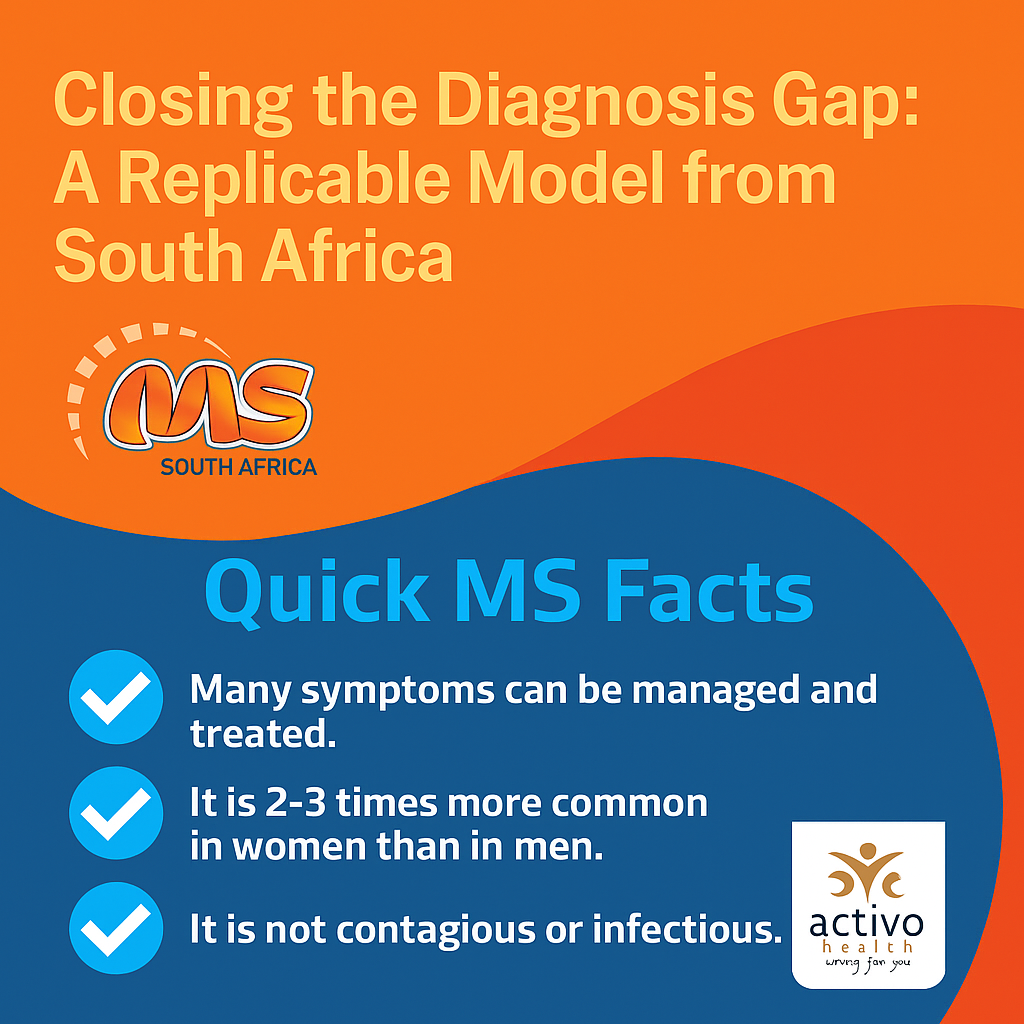
A three-part GP Upskilling Series with Dr Dion Opperman, made possible through a grant from Activo Health. Why This Series Matters Across South Africa — and much of the world — people with multiple sclerosis (MS) continue to face late or incorrect diagnoses, often after years of unexplained symptoms. The consequence is not only emotional and physical distress, but also accumulated, irreversible disability that could have been slowed or prevented with earlier intervention. This blog introduces a three-part educational video series by Dr Dion Opperman, neurologist and member of the MSSA Medical & Scientific Advisory Board, created to upskill general practitioners (GPs) and frontline healthcare professionals. The project was born from the urgent need to address delayed diagnosis and strengthen the referral pathway between primary care and specialist neurology. It was made possible through the support of Activo Health, whose grant enabled the series’ recording and professional production — a first of its kind for South Africa. The Impact of Delayed Diagnosis When MS is diagnosed late, treatment options narrow and outcomes worsen. Early and accurate diagnosis allows for the initiation of disease-modifying therapy (DMT), reducing relapses and long-term disability. Late diagnosis, however, shifts the focus to managing complications, preserving function, and improving quality of life. The difference between these paths often lies in the GP’s ability to recognise MS early — understanding when a constellation of seemingly unrelated neurological symptoms warrants referral to a neurologist. This is where education makes a tangible difference — and where this series begins. The Educational Series: Scroll to Watch Each video builds on the last, offering GPs clear, locally relevant guidance for improving MS outcomes from the very first consultation. Episode 1 – Understanding Multiple Sclerosis: Recognising the Red Flags Watch on Vimeo Dr Opperman explains the underlying mechanisms of MS, the hallmark signs and symptoms, and how subtle or transient neurological changes can be easily overlooked in general practice.Key points: How MS affects the central nervous system Typical early signs: vision loss, balance changes, numbness, fatigue Diagnostic workup and MRI interpretation essentials When to suspect MS and refer for specialist assessment Episode 2 – Treatment Pathways and Monitoring: What GPs Need to Know Watch Replay This episode focuses on treatment initiation and continuity, giving primary-care clinicians an overview of current DMT options in South Africa and the GP’s role in ongoing patient support.Key points: Disease-modifying therapies: what’s available and how they work Addressing access barriers in private vs. public sectors GP’s monitoring responsibilities (safety, side effects, adherence) Supporting informed, shared decision-making Episode 3 – Living Well with MS: The GP’s Perspective Watch Replay The final session explores how to sustain long-term wellness in MS, highlighting the GP’s pivotal role in managing fatigue, pain, mental health, and comorbidities.Key points: Managing cognitive and emotional changes Referring to allied professionals (physio, neuropsychology, OT) Lifestyle interventions that preserve brain health Coordination of care for better patient outcomes From Local Practice to Global Progress The launch of this South African GP Upskilling Series aligns with global conversations at ECTRIMS 2025, where new research continues to refine how MS is diagnosed and treated. The updated McDonald diagnostic criteria — expected to integrate advanced MRI markers, spinal fluid analysis, and emerging biomarkers of neuroinflammation — promise earlier and more accurate identification of MS than ever before.But these advances will only reach patients if frontline clinicians know what to look for. This is why this series is more than education; it’s a replicable model for health system strengthening. By starting with the doctors who first see the patient, MSSA is helping close a diagnostic gap that has persisted for decades across Africa. Acknowledgement MSSA extends sincere appreciation to Activo Health for their collaboration and funding support, and to Dr Dion Opperman for his ongoing contribution to improving MS care, education, and patient outcomes in South Africa. Learn More and Get Involved Explore more MSSA educational resources: https://www.multiplesclerosis.co.za Join the MSSA professional network or support groups: https://bit.ly/3HnZeHw Contact: non@multiplesclerosis.co.za Multiple Sclerosis South Africa (MSSA)Advancing early diagnosis, equitable access, and informed care across the MS landscape. — Non Smit (CEO) Team MS South Africa

Closing the Diagnosis Gap: A Replicable Model from South Africa Read More »