
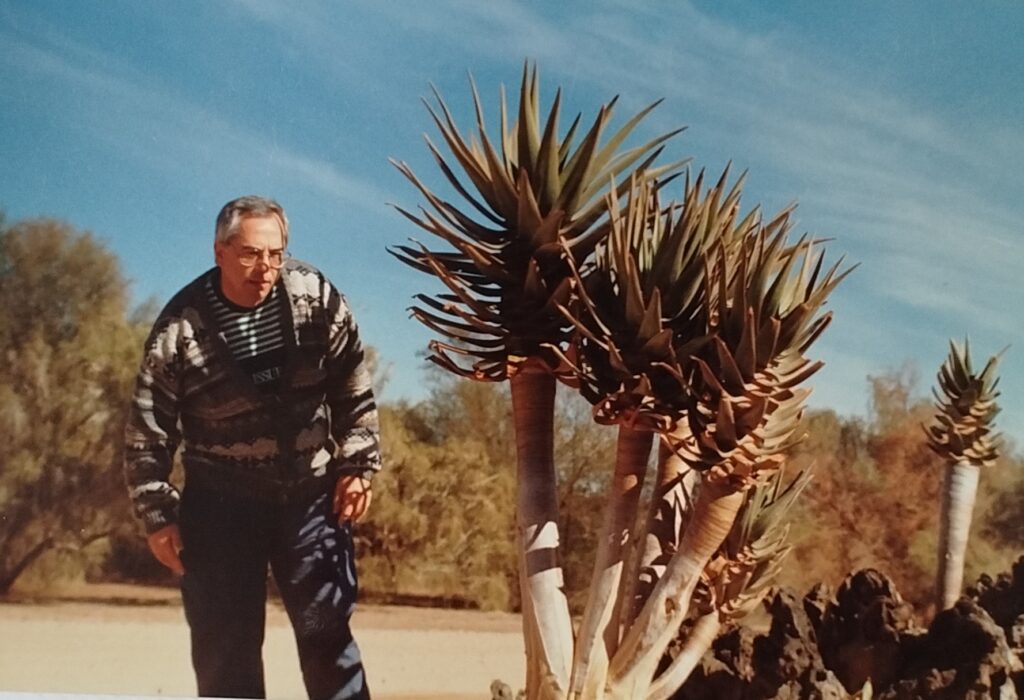
— and How He Turned His Journey Into Support for Others
A story of faith, endurance, and a life lived in service despite decades of uncertainty
When Theodore Bentley reflects on his life with Multiple Sclerosis, he does so with honesty, humility, and remarkable grace. Now 78, Theodore believes he has lived with MS since the age of 16 — long before the disease was recognised, understood, or diagnosable in South Africa.
A Childhood Illness That Never Fully Resolved
In 1962, as a teenager, Theodore became severely ill and was bedridden for six weeks with intense pain. Doctors diagnosed him with rheumatic fever following a tonsillectomy, but the explanation never fully made sense. Countless tests over the years provided no clarity, and the pain became an ongoing companion in his life.
Decades later, in 1989, everything changed.
“I woke up unable to see properly and had a rash. A skin specialist sent me to an ophthalmologist, who suspected MS.”
A neurologist at Tygerberg Hospital began extensive testing — MRIs, lumbar punctures, evoked potentials — and monitored his blood monthly to rule out other conditions, especially given that Theodore had lived in Namibia. Eventually, MS became the most accurate and consistent explanation. Retrospective testing revealed he had never had rheumatic fever, but Glandular Fever, which had likely triggered the long-term immune complications that evolved into MS.
A Diagnosis in the Early HIV Era
Theodore’s worst symptom flare coincided with the early days of the HIV/AIDS crisis, when fear was widespread and medical knowledge was limited. Support systems were almost non-existent. He describes the uncertainty of that period as deeply frightening.
But he did not walk it alone. A PhD student selected Theodore’s case as part of her research, offering him support and structure at a time when very little was available. His church community rallied too, surrounding him and his family with prayer, companionship, and practical support.
“I had to learn to cope with depression and fatigue. My moodiness and lack of patience were difficult for my family. It’s a miracle I have a wife, family, and friends.”
With renewed strength, Theodore returned to work and held onto his managerial role — determined not just to survive, but to find meaning.
Turning Pain Into Purpose
Faith became a central compass. Theodore studied theology and eventually served as a pastor, offering care and comfort to community members facing illness. Sitting beside those who were suffering, being a shoulder for others, and offering spiritual companionship became one of the most meaningful roles of his life.
This work allowed him to transform struggle into service.
A Family Built by Love and Determination
Theodore and his wife married at 22. After years of struggling to conceive, they adopted their son. Later, to their joy and surprise, they welcomed a daughter. Today, their home is filled with grandchildren — a family Theodore describes as a blessing beyond measure.
Staying Active, Staying Connected
Movement is essential to Theodore’s well-being. He and his wife walk regularly — often in Kirstenbosch Gardens, or in shopping malls when the weather is unpredictable. He also enjoys golf with friends, even when MS symptoms make it challenging.
His health challenges are ongoing. Swallowing difficulties, sinus issues, and continuous battles with medical aid authorisations are part of his life. But what troubles him most is something many people with MS will recognise:
“One thing I struggle with is when people say, ‘But you look so good.’ It feels like a dagger in the back — like they think I’m not really sick, or that I’m crazy.”
Invisible symptoms remain one of the most painful and misunderstood aspects of MS.
Theodore’s Advice for Others Living With MS
His guidance is heartfelt, simple, and wise:
“Find a compassionate doctor who listens first. My first doctor didn’t hear me — I walked out and found one who did. Now we face the illness together as a team.”
Beyond medical care, Theodore encourages small but powerful daily habits:
“Get up, dress up — it helps your well-being — and show up.
And above all, trust in the Lord.”
Theodore’s life is shaped by decades of uncertainty, pain, resilience, faith, and love. His story shows that MS is not only a medical journey — it is a human one, woven with relationships, belief, perseverance, and purpose. Through everything, he has found strength not just in surviving MS, but in using his experience to uplift others.