
The MS Lens is a storytelling series by Multiple Sclerosis South Africa sharing lived experiences from across the MS community.
The MS Lens
When the Doctor Becomes the Patient
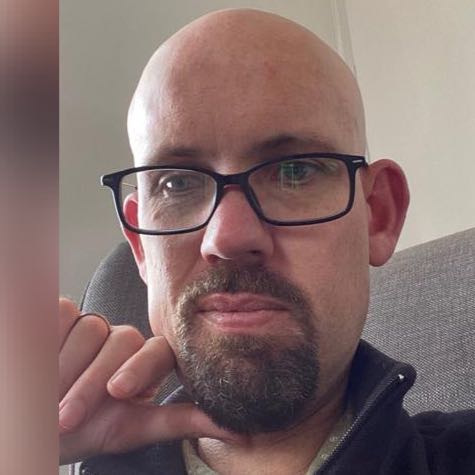
Featuring Dr Jan-Gert Nel
There is something deeply disorientating about a doctor becoming a patient.
Trained to diagnose.
Trained to interpret scans.
Trained to reassure others.
At 25, newly qualified and physically strong, Jan-Gert believed he was stepping into a long career in medicine. Instead, his own body began telling a story he could not yet name.
This is his journey.
“It Went From Something in My Head to Something That Really Is in My Head.”
I was 25 years old when I was diagnosed with multiple sclerosis on 27 October 2005.
I had qualified in 2003 from Stellenbosch University and was completing my internship. I had never missed a day of school due to illness. I was six foot four, about 100 kilograms, and played squash regularly. I considered myself healthy.
In October 2004, I walked out of the hospital and noticed diminished sensation in both feet. It was not painful. It was simply wrong.
An MRI of my spine suggested a prolapsed disc. I accepted the explanation and carried on.
A year later, while working in Kimberley, I was in the shower when I realised I could not feel my fingertips. That felt different.
A physician in Cape Town reviewed my scans and referred me to a neurologist. Nerve conduction studies showed decreased conduction. A lumbar puncture followed. I had developed Lhermitte’s sign, with electric sensations down my legs when I flexed my neck.
On 27 October 2005, I was officially diagnosed with multiple sclerosis.
The radiologist who showed me the MRI had been my roommate during medical school. I remember him becoming emotional while telling me.
Strangely, I felt relieved.
Relieved because what I had been experiencing was no longer just anxiety or imagination. It went from something that felt “in my head” to something that truly was in my head and visible on MRI.
The diagnosis happened on my mother’s birthday. She took it hard. No parent wants to hear that their child has a chronic neurological disease.
I now have four children of my own. The twins turn eleven this year. As a father, I would rather carry any diagnosis myself than see it in one of theirs. Christelle, Lara, Daniel, Eben and Jannu.
I started treatment in February 2006 on one of the early injectable therapies. Injecting every second day sounds simple, but adherence is harder than people think. Eventually, I transitioned to a six-monthly infusion therapy, which has made management easier.
Shortly after diagnosis, I struggled to walk and dragged my left leg. I developed persistent clonus. I also experienced chronic uveitis and abnormal blood vessel growth in my eye, leading to retinal bleeds and a vitrectomy in my left eye, followed by lens replacement.
Cognitively, the disease has affected me. Diminished cognitive capacity ultimately led to me being medically boarded. Medicine was my calling, so that was not easy.
There is a family history of psychiatric illness, and I have been on antidepressants since around the time of diagnosis. I have also worked with psychologists. Therapy has given me tools for difficult days.
My mother passed away on 16 December 2024. Losing her has been one of the hardest chapters of this journey.
If you ask me how I feel, the answer is layered.
There has been relief.
There has been loss.
There has been frustration.
There has been gratitude.
And there is still life.
Through The MS Lens, we are reminded that multiple sclerosis does not discriminate. It reshapes identity, career, family and perspective. When the doctor becomes the patient, the white coat falls away and what remains is something profoundly human — resilience, vulnerability, and the quiet determination to keep living fully.